Place of Origin : Xiangyang,China
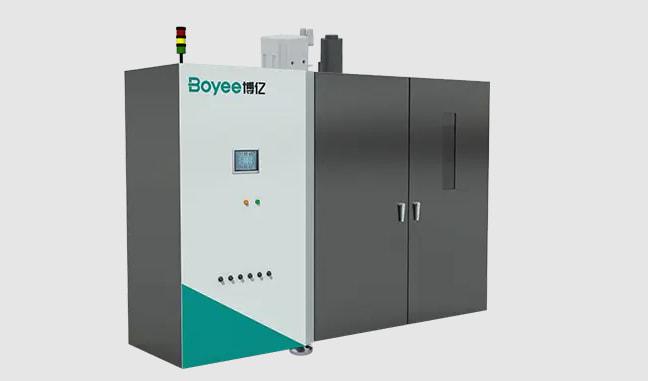
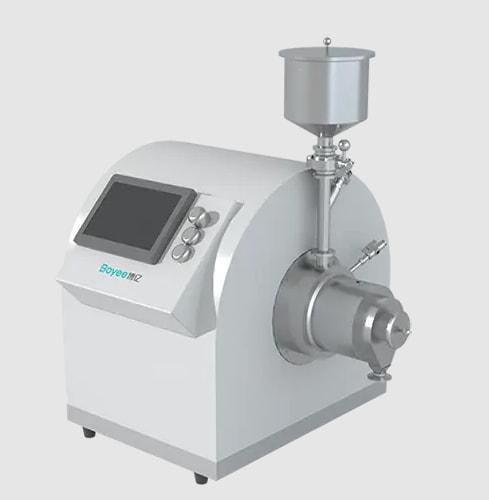
The ceramic rotor spins at high speed to drive the zirconia beads into motion. Through intense collisions between the zirconia beads and the material, large particles are broken down. Subsequently, the friction between the zirconia beads and the material, as well as between the material and the chamber, further re fines the material to the target particle size.
Principles Of Mechanical Grinding
The Ceramic Rotor Spins At High Speed To Drive The Zirconia Beads Into Motion. Through Intense Collisions Between The Zirconia Beads And The Material, Large Particles Are Broken Down. Subsequently, The Friction Between The Zirconia Beads And The Material, As Well As Between The Material And The Chamber, further Re fines the Material To The Target Particle Size.
Principles Of Precise Grading
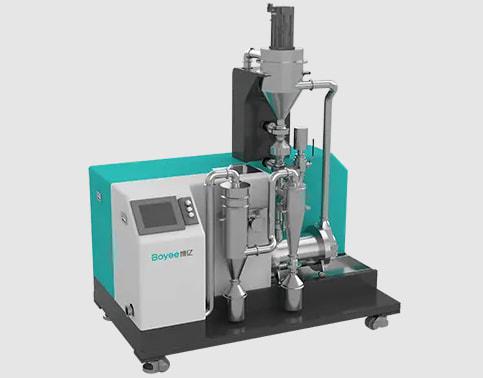
The Classi er Utilizes Speci fic Airflow And Mechanical Structures To Screen Materials Based On Particle Size And Density Differences, Ensuring Qualifi ed Particles Enter The Collection Stage And Achieving Precise Particle Size Control.
Principle Of Efficient Collection
The Combination Of A Cyclone Collector And Dust Collector Is Employed, Where The Cyclone Collector Recovers Bulk Material Through Centrifugal Force, While The Dust Collector Captures Fine Powder Via Filtration, Achieving Waste-free Material Recovery In Dry Bead Mill Applications.
Equipment Advantage
01 Dry Grinding Mill Provides More Uniform Grinding Force, Ensuring Stable Fine Grinding Effect.
02 Real-time Finess Control, With An Extremely Narrow Particle Size Distribution
03 Enhanced By Fluidized Bed Technology Achieving Higher Classification Efficiency
04 Low-cost · Submicron · Zero-waste
05 Wear-resistant · Temperature-stable · Controllable